Prepared for prospective Indianapolis owners · A team charter · September 2026
Back home again, in Indiana.
For forty-one summers Indianapolis had professional tennis: Connors, Evert, Graf, Sampras, Roddick. Then it stopped. This page makes the case for bringing it back — not as a week that visits, but as a team the city owns, in the months its calendar leaves open.
A team for central Indiana · Eleven sections, about seven minutes
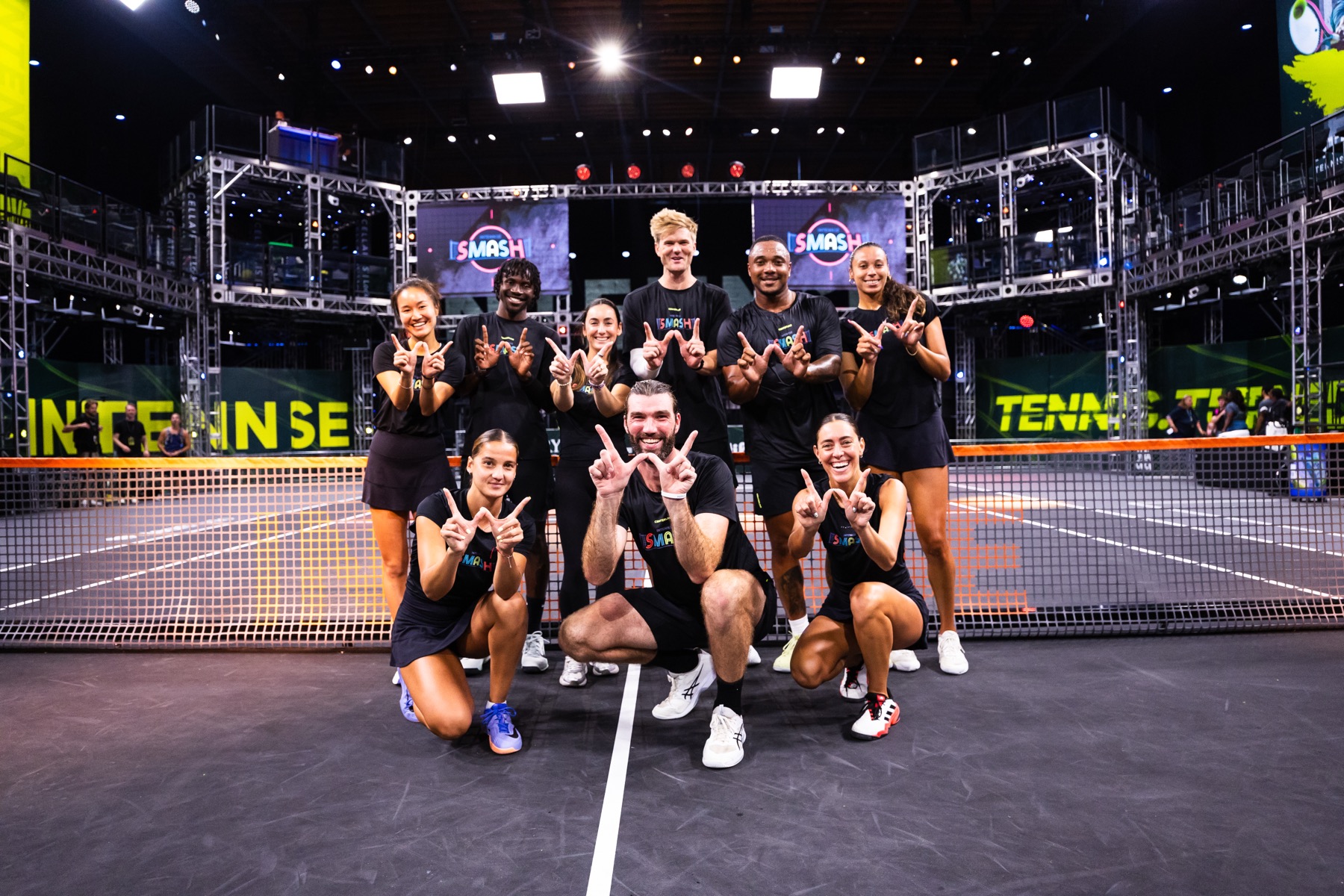
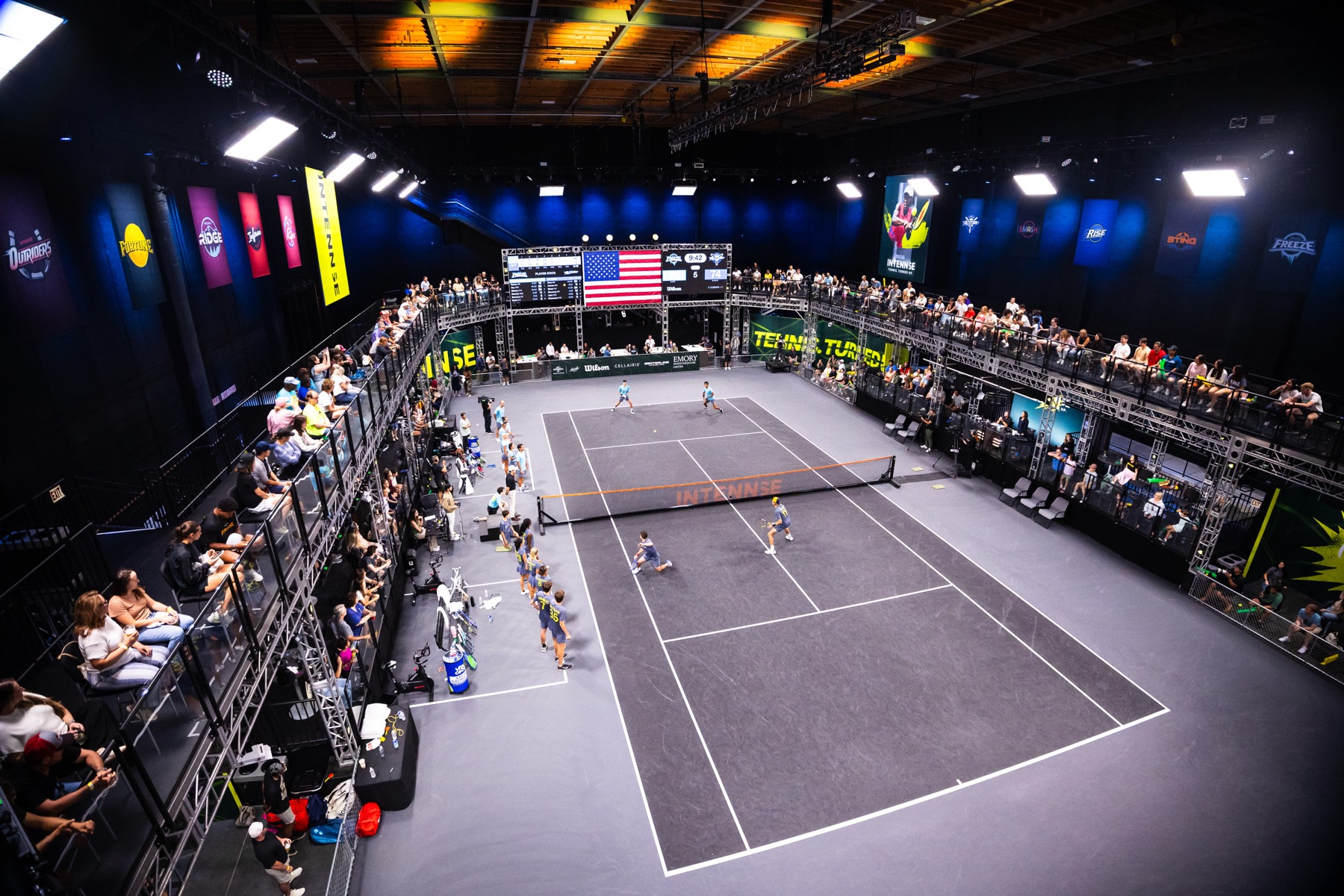
In the stands at INTENNSE Arena · Season 2
A gender-balanced Professional Team Tennis League
Eight playing weeks in the middle of the summer. Switch the view to see the same season against the American sports year, or against the college calendar our players come from.
Where our players have been on the tour, and where they sit on the rating that covers everyone. The orange rule is where tennis starts paying for itself.
UTR: our players against the tour’s
Down to the wire; Sudden Death
Two Arcs that finished a point apart. Each clip picks up in the closing minutes, with the full Arc a click away.
Sudden death, level at 142
The final three minutes of Freeze v Rise, 20 June. The clock runs out with the teams tied, and the next point decides it: 143–142.
Match Center ↗One point, one minute left
The final minute of Outriders v Inferno, 25 June. It finishes 150–149, with the winner’s cheque on court.
Match Center ↗Two points that flipped the score
One from the net, one from the low camera. Each is about twenty seconds, and each one changed the scoreboard.
Low angle, the final Bolt
The last play of the Bolt from the low camera: a two-pointer that takes the Sting from 86–87 to 88–87. 22 seconds.
Match Center ↗Mixed doubles, last seconds
Dalayna Hewitt’s two-pointer in the closing seconds against Rise, 15 July — 156 to 158, level. 18 seconds.
Match Center ↗■ The history
Connors, Evert, Graf, Sampras. Then nothing, for seventeen years.
The U.S. Clay Court Championships moved to Indianapolis in 1969. For the next four decades the city held one of the best-attended events in American tennis, with more than 90,000 people a year through the 1980s and 1990s and a 10,000-seat stadium built for it. After 2009 the tournament left, and no main-tour event has come back since.
Who won here
Chris Evert won the women’s title six times, between 1972 and 1980. Jimmy Connors won the men’s four times, beating Björn Borg in the 1974 final. Billie Jean King won in 1971, Ivan Lendl in 1985, Mats Wilander in 1987, and in 1986 Steffi Graf beat Gabriela Sabatini in the women’s final. In 1978, Peter Bodo wrote, the Indianapolis field was “second only to the entry list at Roland Garros.”
The event moved onto hard courts and kept its names: Pete Sampras won three times, Jim Courier, Patrick Rafter and Gustavo Kuerten once each, and Andy Roddick in 2003 and 2004. James Blake won it in 2006.
The men’s event ran every summer from 1969 to 2009, and the women’s tour played in Indianapolis too, indoors at the Indianapolis Racquet Club from 1983 to 1992.
Why it left, and why a team is different
When the Indianapolis Business Journal reported in November 2009 that the city would lose the event, it listed the reasons: the title sponsor had gone after 2006, the network television deal had gone, the ATP had moved the week from the run-up to the US Open into July, there were fewer American men to sell, and the university planned to demolish the stadium.
Every one of those is a problem for a single tournament that visits once a year and depends on who enters. A resident team works the other way. It plays a season rather than a week, its players are the city’s own from the first night, and it does not need a star in the draw to fill a building. The league sells the national rights; the local owner sells Indianapolis.
1969 to 2009, clay and then hard court.
Through the 1980s and 1990s, as the IBJ reported.
No ATP or WTA tour event in the city since 2009.
■ The ground
The old stadium is now an arena, next door to the NCAA.
The Indianapolis Tennis Center closed in August 2010 and its stadium came down that summer. On the same ground, beside the NCAA’s national office, IU Indianapolis is finishing the James T. Morris Arena: $110 million, about 4,200 seats, with its first game set for November.
Why that matters to us
Tennis lost its home court in this city to college sport. INTENNSE is a college-to-professional product: most of our players came to the league straight from NCAA programmes, and our season opens a few weeks after the college championships close.
An INTENNSE night in that arena, on the ground where Connors and Evert played, would be the most Indianapolis thing a tennis team has ever done. We’d like to propose it as the team’s introduction to its city.
■ The calendar
May belongs to the Speedway. June and July are open.
Indianapolis runs one of the fullest sports calendars in America, and most of it sits in May, in August and in the winter. Between the 500 and the late-summer run of Black Expo, Gen Con, Drum Corps and the State Fair, the city has no anchor event and no major-league team in season. That is where our eight weeks fall.
The Indy 500
About 350,000 people at the Speedway; the grandstands sold out again in 2026.
The team
An eight-week professional season, evening matches, three women and three men on one score.
Black Expo to the State Fair
Summer Celebration, the Brickyard, Gen Con, DCI World Championships, the Fair.
The big events
The Big Ten championship, the NFL Combine, the Final Fours.
Indianapolis–Carmel–Greenwood, up 5.6% since 2020, twice the state’s rate.
Nielsen, 2025–26.
The highest in Indiana; 63% of adults hold a degree.
Sports Business Journal, behind Atlanta and New York.
The city that invented the sports commission
Indiana Sports Corp was founded in 1979 as the nation’s first sports commission, with the aim of making Indianapolis the amateur sports capital of the world. It has since hosted more than 500 events. The NCAA moved its national office here in the late 1990s. USA Track & Field and USA Football are here, and USA Gymnastics is building its new headquarters in Noblesville. This April the city staged its ninth men’s Final Four and set the event’s attendance record.
When Sports Business Journal ranked the city third in May, Pacers Sports & Entertainment’s chief executive gave the reason in one line:
“Our secret sauce is the strength of our incredible public-private partnerships.”
Mel Raines · President & CEO, Pacers Sports & Entertainment · 18 May 2026
A ten-year territorial charter is that kind of partnership: a league that brings the product, and local owners who build it into the city.
■ The audience
This city filled a building for women’s sport.
The Fever averaged about 4,000 a game in 2023. In each of the next two seasons they averaged more than 16,500. Indianapolis did not just watch the rise in women’s sport; it led it. INTENNSE is built for that audience: three women and three men on every team, and one score in which a woman’s point counts exactly as much as a man’s.
“Last year, we experienced an unprecedented boom in interest and attention on women’s sports around the world, led in large part by our very own Indiana Fever.”
Mayor Joe Hogsett · 16 January 2025
The rest of the picture
Indiana Sports Corp has set out to make Indianapolis the women’s sports capital of the world, and the city hosts the NCAA Women’s Final Four in 2028. Indy Ignite, the city’s professional women’s volleyball team, sold out its first match in Fishers and finished 2026 first in the league. Pacers Sports & Entertainment is building a $78 million performance centre for the Fever, due before the 2027 season.
We don’t see a summer team as competition for any of it. The Fever play downtown on a May-to-September schedule; an INTENNSE team would add a second, different night out for the same fans, most of it in the weeks the city’s calendar leaves open.
■ The tennis already here
The USTA’s Midwest capital is on 96th Street.
USTA Midwest, the section that runs the game across five states, has its headquarters in Indianapolis, and in June it opened a public indoor tennis centre next door. The governing body is putting money into this market now: an ATP Challenger in Brownsburg this August, and a USTA grant towards the 12-court complex Butler started building this month.
From the park courts up
Barbara Wynne started free tennis for city children at Riverside Park in 1969. It became Indianapolis’s National Junior Tennis & Learning chapter in 1973 and has taught more than 50,000 children since; it now reaches over a thousand a year at twenty-plus sites, including free lessons in Indy Parks. The 26-court centre at North Central High School that carries her name hosts the state high-school finals.
Brownsburg’s 21-court complex, opened in 2025, staged the first Indiana Hardcourt Championships in August, the final stop of the USTA’s US Open wild-card challenge. The Indianapolis Racquet Club, opened in 1965 as the state’s first indoor club, still runs 24 indoor courts. The University of Indianapolis hosts the Division II national team indoors through 2027. Butler, IU Indianapolis, Indiana, Purdue, Notre Dame and Ball State all play Division I tennis within a few hours’ drive.
Junior
NJTL and Indy Parks courts: clinics and camps in the team format.
School
High-school tennis on the same rules, and a ballkeeper programme on the pro court.
College
Butler, IU Indy, UIndy and the Big Ten, feeding the draft.
The team
A drafted professional place, in front of the home crowd.
■ Hometown
Carmel already makes professionals.
Rajeev Ram went to Carmel High School, still lives in Carmel, and retired this month after the US Open with six major titles and two Olympic silver medals. Nishesh Basavareddy grew up in Carmel, went to Stanford, and beat Taylor Fritz at Roland Garros in May. The market already has the people who can tell its tennis story.
Including three straight US Open doubles titles, 2021–23.
Rio 2016 with Venus Williams; Paris 2024.
From Carmel High to Stanford to the top hundred.
Why this is our kind of player
Basavareddy’s route, junior tennis in central Indiana to college tennis to the professional tour, is the route most of our players took, except that most of them arrive in the ranks where tennis does not yet pay for itself. The chart in the bar at the top of this page shows where the league’s drafted players sit against the tour.
Ram’s foundation already runs youth grants, clinics and a 10-and-under combine with USTA Midwest. Nobody named here has been approached about this page or agreed to anything. We name them because they show what the market already produces.
■ The local business
The brands that paid for Indy tennis are back in Indy sport.
RCA put its name on the Indianapolis tournament from 1992 to 2006. In May it came “home to Indiana” as a partner of the Fever, its first investment in women’s professional sport. Eli Lilly backed the tournament in its last years, and now wears the patch on the Fever’s jersey. The sponsors a local owner would call are already spending on sport here.
What stays with the team
Local sponsorship, ticketing, hospitality and activations belong to the charter holder, not the league. In Indianapolis that is a deep market: the Fever alone signed 85 partners in 2025. Old National Bank is the Fever’s official bank, and banking is an open category in tennis. Lilly also title-sponsors the Women’s College All-Star Game and backs Indy Ignite. Salesforce and Elevance Health have both backed the Fever at scale.
Local television is looking for hometown sport too. Circle City Broadcasting, which is locally owned, now runs WISH, WRTV and MyINDY, and already carries Indy Eleven and Butler basketball.
■ What Season 2 did in Atlanta







A season that already sells.
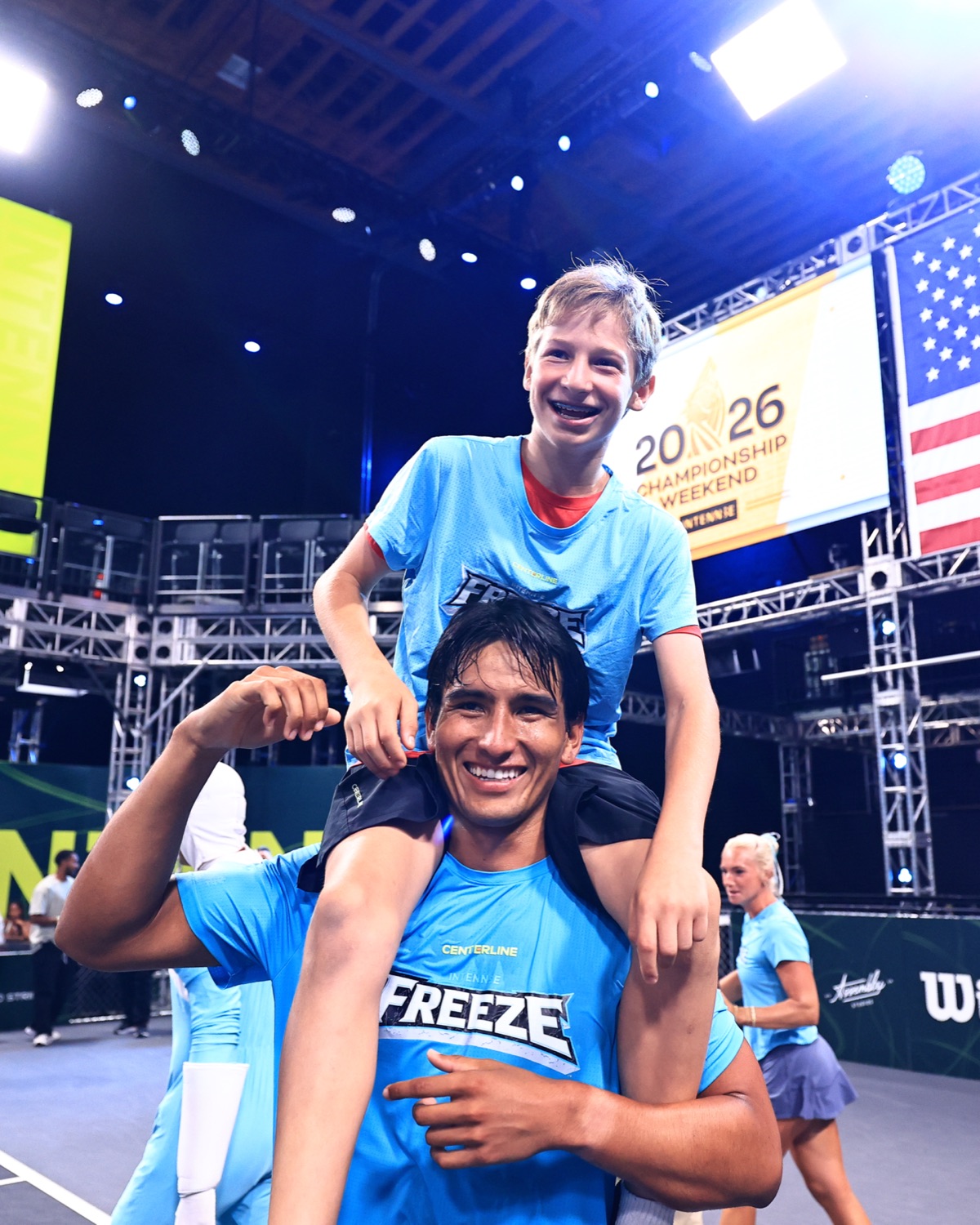
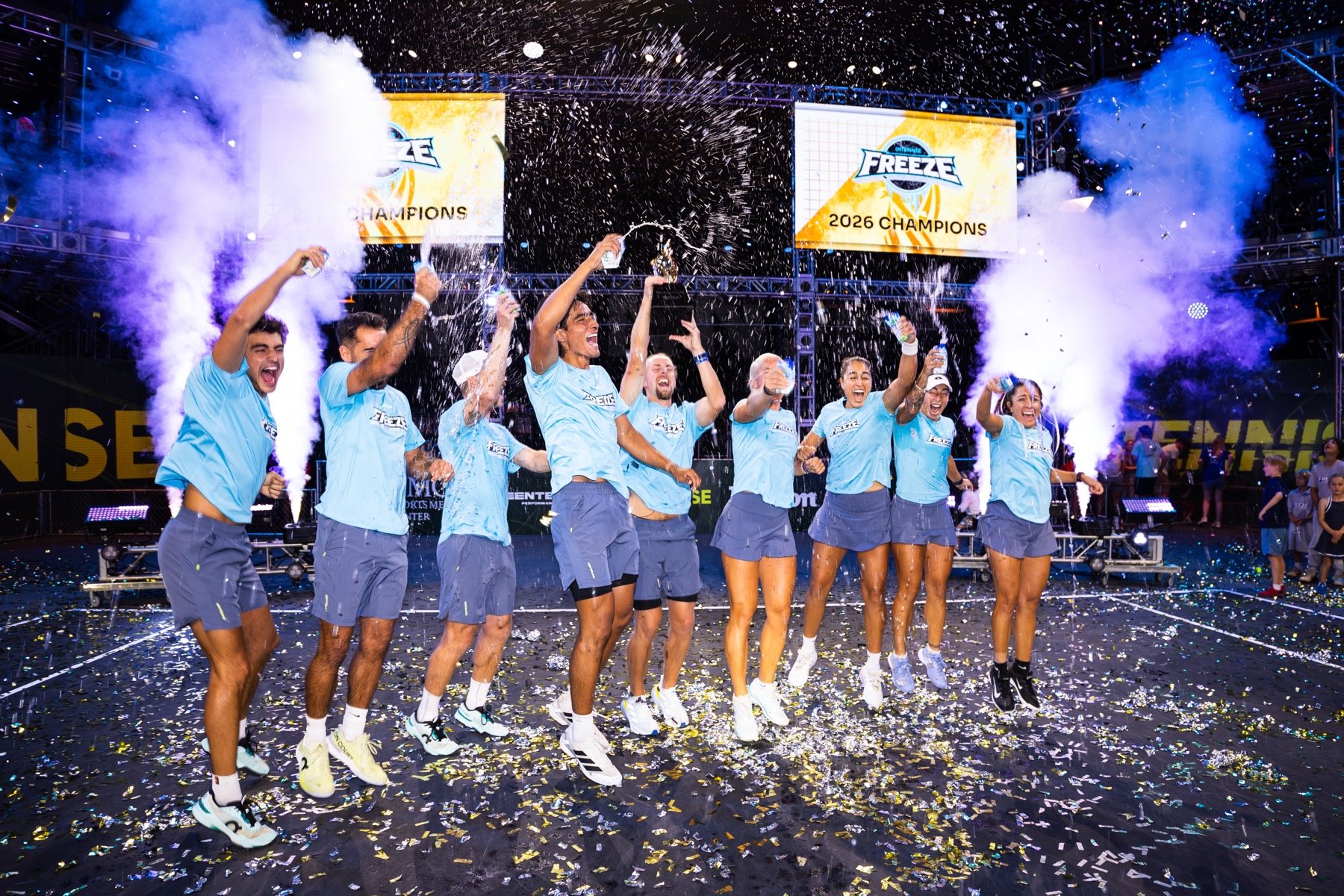
Ten teams, eight weeks, fifty-four Arcs, forty-three of them Pro Arcs. Season 2 closed on 1 August with Freeze beating Outriders 137–130 in front of a full house.
The local business in Atlanta
By midseason, attendance was more than four times the year before and had already passed the whole of 2025. Thirteen sponsors signed, twelve of them through relationships already in the city, with Atlanta-based Cellairis as Founding Partner. The average ticket sold for $52, and team merchandise outsold league merchandise.
Eleven community events drew 770 people off the couch and onto a court. Those are the numbers a local owner inherits and builds on.
The Rules of INTENNSE, explained · 2:04
Nearly 8,000 fans through a 500-seat arena.
Average across forty airings on Peachtree; the best single Arc drew 116,000.
Record live concurrents across the final series.
Two broadcast, two RSNs, seven FAST, three streaming — 60% of watch time on TV.
■ What an owner holds
A ten-year charter for central Indiana.
Owners hold an exclusive Team Charter: MLS-style, geographically bound economic rights, not a traditional franchise. Ten years, renewing in five-year terms, across the Indianapolis metro from Greenwood to Westfield. Which team plays here, and what it is called, is a conversation we would rather have with you than settle on a page.
The league keeps
- Game
- Format, rules, schedule, officiating
- Brand
- League marks and national sponsorship
- Rights
- Media and data rights
The owner holds
- Team
- Operations and team marks in the territory
- Revenue
- Local sponsorship, ticketing, hospitality, activations
- Content
- Local content within league rules
- Share
- Team merchandise, and a share of pooled league revenue
2026–27
The league operates the team and secures venues while Indianapolis events begin to build its audience, and the owner learns the business from inside it.
2028
The team moves home. The owner appoints a GM, takes ticketing, hospitality and venue, and inherits a community playbook proven over three years in Atlanta.
2029 on
Scale — and a share of the fees from every charter the league sells after the initial offering.
Where it could play
An INTENNSE Arc needs one court, a clock and a crowd close to it; our arena in Atlanta is 30,000 square feet. The market already has the rooms. Fishers Event Center seats about 7,500 and its winter tenants are dark in June and July. Brownsburg has shown it can stage a professional event outdoors. The Indianapolis Racquet Club and the new USTA Midwest centre have indoor courts at club scale, and Butler’s new complex is being built with spectator seating.
We have not approached any of these venues. The choice would be made with the owner, and it is one of the things 2026–27 is for.
How the economics are built
The owner keeps the large majority of the revenue the team earns locally. Separately, a share of league revenue is pooled and distributed across the teams, so an owner participates in the league’s growth as well as the team’s. From 2029, owners also share in expansion fees as the league adds cities: a home market for every team by 2028, and a market we believe will carry thirty or more teams by 2035.
It is a franchise-value investment first, and the operating model takes several seasons to turn cash-positive. We’ll walk you through that model, line by line, in the room rather than on a page.
■ What early looks like
The first owners in a league buy the cheapest seats it will ever sell.
That is the pattern in every emerging league that lasted.
What we are not claiming
Not every new league lasts, and nothing about the ones that did is a promise about this one. In Major League Pickleball, teams that changed hands for around $100,000 in 2021 were valued near $10 million two years later; other ventures of the same era are gone.
The argument is only this. If team tennis becomes a real league in America, the charters sold before 2029 will have been the cheap ones. We think Season 2 is the evidence that it will.
■ Who you would be building with
The people behind the league.
■ Pulse Partners, by team
A Pulse Partner is an ambassador, not an owner.
■ Why we sent this
We’re looking for Indianapolis’s owners.
What we cannot show you yet: we have never played an Arc in Indianapolis. There is no team named for the city, no home club, no local staff and no Indianapolis season behind it. Everything on this page is either the league’s record in Atlanta or the city’s own. The rest would be built with you.
A local group for a team that stays: people who remember the summers this city had tennis, and want the version that doesn’t leave.
Where an hour could lead
We’ll bring the charter, the model and the transition plan, and answer every question about them. If it’s worth a second hour, we’d rather it were courtside in Atlanta than in a conference room.
The charter
Terms, territory and the path from league-operated to owner-operated, walked through in full.
The team
Which team, its name and its colours: an existing crest brought home, or one drawn for this city.
The first night
An Indianapolis exhibition before 2028 to introduce the team to its city, on the old Tennis Center ground if we can get it.
The model
Revenue lines, breakeven and the years to cash-positive — the numbers we left off this page on purpose.